Bitcoin halving explained: when is the next halving?
What the Bitcoin halving is, why it happens every four years, when the next one is expected (around 2028) and what it has meant for prices.
Few events in crypto get as much attention as the Bitcoin halving. Every few years, the number of new bitcoins created per block is cut in half. This happens automatically, by code, and no central bank or company decides it. If you have seen headlines saying the halving is "bullish", this guide explains what actually happens, when the next one is due, and what history can and cannot tell you.
Key takeaways
- The halving cuts the Bitcoin block reward by 50% every 210,000 blocks, which works out to roughly every four years.
- The last halving was on 20 April 2024 (block 840,000), cutting the reward from 6.25 to 3.125 BTC.
- The next halving is expected at block 1,050,000, most likely in early-to-mid 2028; the exact date depends on how fast blocks are mined.
- Past halvings were followed by bull markets, but with only four data points and many other drivers, that is not a guarantee.
- For Indian investors, the halving changes nothing about tax: gains remain taxed at a flat 30% plus cess, with 1% TDS on transfers.
What is the Bitcoin halving?
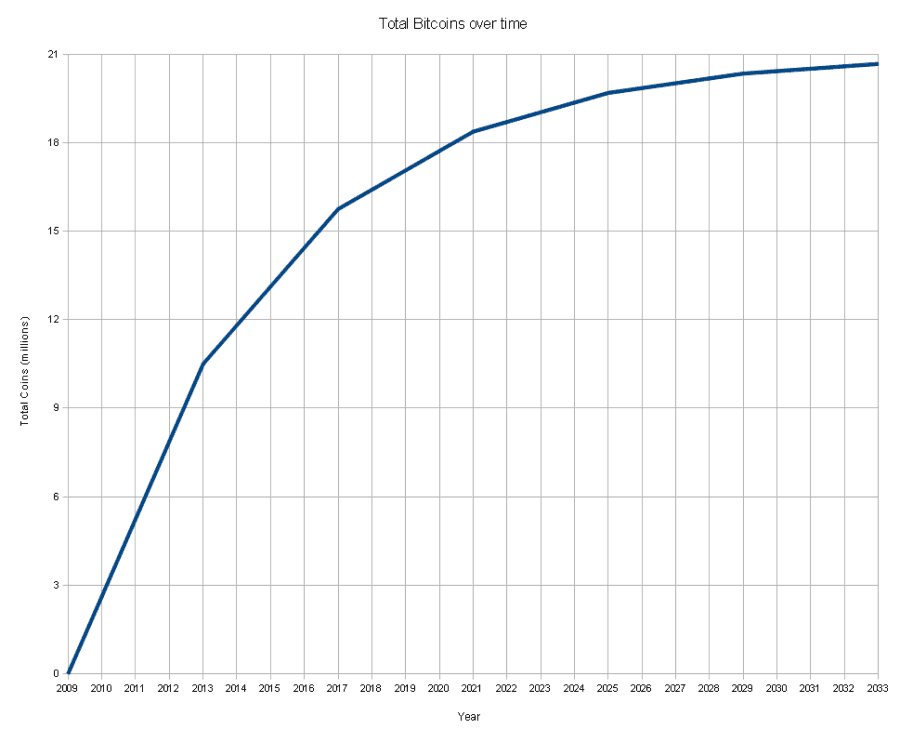
New bitcoins enter circulation as a reward to miners, the computers that bundle transactions into blocks and secure the network. When Bitcoin launched in 2009, each block paid 50 BTC. Satoshi Nakamoto's code specifies that this reward halves every 210,000 blocks. Because a new block is found about every 10 minutes on average, 210,000 blocks take roughly four years.
The halving is the mechanism that enforces Bitcoin's hard cap of 21 million coins. Each halving slows new supply, so the total approaches 21 million but only gets there around the year 2140. More than 20 million bitcoins have already been mined, which means well over 95% of all bitcoin that will ever exist is already in circulation. You can follow the live price and supply on our Bitcoin page.
Bitcoin halving history
- 28 November 2012 (block 210,000): reward cut from 50 to 25 BTC.
- 9 July 2016 (block 420,000): 25 to 12.5 BTC.
- 11 May 2020 (block 630,000): 12.5 to 6.25 BTC.
- 20 April 2024 (block 840,000): 6.25 to 3.125 BTC.
Each halving reduces the number of new coins created per day. At 3.125 BTC per block and about 144 blocks a day, the network now issues roughly 450 BTC per day, down from about 900 before April 2024.
When is the next Bitcoin halving?
The fifth halving will happen at block 1,050,000, when the reward drops from 3.125 to 1.5625 BTC. Most public countdown trackers put it in the first half of 2028, commonly around March to May. Treat any exact date you see as an estimate: blocks sometimes arrive faster than every 10 minutes when a lot of new mining power joins the network, and the protocol only adjusts mining difficulty every 2,016 blocks (about two weeks). The halving is tied to a block number, not to the calendar.
Why the halving matters
1. Supply issuance drops
The basic economic argument is simple: if demand stays the same and new supply falls, the price pressure should be upward. Miners typically sell part of their rewards to pay for electricity and hardware, so fewer new coins means less routine selling.
2. Miner economics get squeezed
Overnight, a miner's revenue in BTC is cut in half. Less efficient miners may switch off unless the price rises or transaction fees make up the difference. That is why the hashrate sometimes dips after a halving before recovering. Over the long run, Bitcoin's security budget is expected to rely more on transaction fees as the subsidy paid per block shrinks.
3. Narrative and attention
Halvings are widely publicised, which draws new buyers and media coverage. Part of any "halving effect" is simply attention, and markets often price in well-known events before they happen.
Does the halving make the price go up?
Historically, each of the first three halvings was followed within about 12 to 18 months by a strong bull market and a new all-time high. After the 2024 halving, Bitcoin also made new highs, though the path was bumpier and heavily influenced by US spot ETF flows, interest rates and global liquidity.
There are good reasons to be cautious about reading too much into this pattern:
- Tiny sample. Four halvings are not enough to prove cause and effect.
- Diminishing impact. Each halving removes a smaller share of total supply. The 2028 cut reduces daily issuance by about 225 BTC, which is small next to daily trading volumes worth billions of dollars.
- Other forces dominate. This week's move, for example, has been driven by US bond yields and rate-hike expectations, not by supply. See our coverage of Bitcoin slipping under $84,000 as yields hit a 2007 high.
- Cycles can break. Institutional products and macro trends may make the classic "four-year cycle" less reliable than it was when Bitcoin was a small, retail-driven market.
If you want to understand where the market is in a cycle, pair the halving timeline with sentiment and structure indicators such as the Fear & Greed Index and Bitcoin dominance, and read our explainer on bull and bear market cycles.
What the halving means for Indian investors
- Tax is unchanged. Any profit from selling bitcoin is taxed at a flat 30% (plus 4% cess and any applicable surcharge), with 1% TDS deducted on transfers above the annual threshold. Losses cannot be set off against other income. Model your numbers with our crypto tax calculator.
- Don't buy the date. Buying heavily just before a halving because "it always goes up" is a narrative trade. Many investors prefer spreading purchases over time; see our guide to crypto SIPs and dollar-cost averaging.
- Check the INR price. Indian exchange prices can differ slightly from global prices. Track the Bitcoin price in INR before you trade.
- Use regulated platforms. Stick to exchanges registered with FIU-IND and keep long-term holdings secure.
Frequently asked questions
When is the next Bitcoin halving in India time?
The halving happens at the same moment worldwide, when block 1,050,000 is mined. It is currently expected in the first half of 2028. Because it depends on block times, the exact date and IST time will only become precise in the final weeks before it.
How many Bitcoin halvings have there been?
Four: in 2012, 2016, 2020 and April 2024. The fifth is expected in 2028.
What will the Bitcoin block reward be after the next halving?
It will fall from 3.125 BTC to 1.5625 BTC per block.
Does the halving affect my bitcoin holdings?
No. The coins you already own are not changed in any way. The halving only affects how many new coins miners receive for each block.
Will there be halvings forever?
Halvings continue until the reward becomes too small to divide, around the year 2140, when the last bitcoin is expected to be mined. After that, miners will be paid only through transaction fees.
This guide is educational and general in nature. It is not investment, tax or legal advice, and nothing here is a guarantee of any return. Crypto is volatile and you can lose money; only invest what you can afford to lose.
This article is AI-assisted, educational and general in nature. It is not financial advice and never a guarantee of profit. Every trade is at your own risk on your own exchange. See our risk disclosure and editorial policy.