
Bitcoin vs Gold Investment in India: Returns, Tax, Risk
Bitcoin vs gold in India: over 5 years to September 2026, gold returned about 219% in rupees and Bitcoin 146%. Tax: 30% on crypto vs 12.5% long-term on gold.
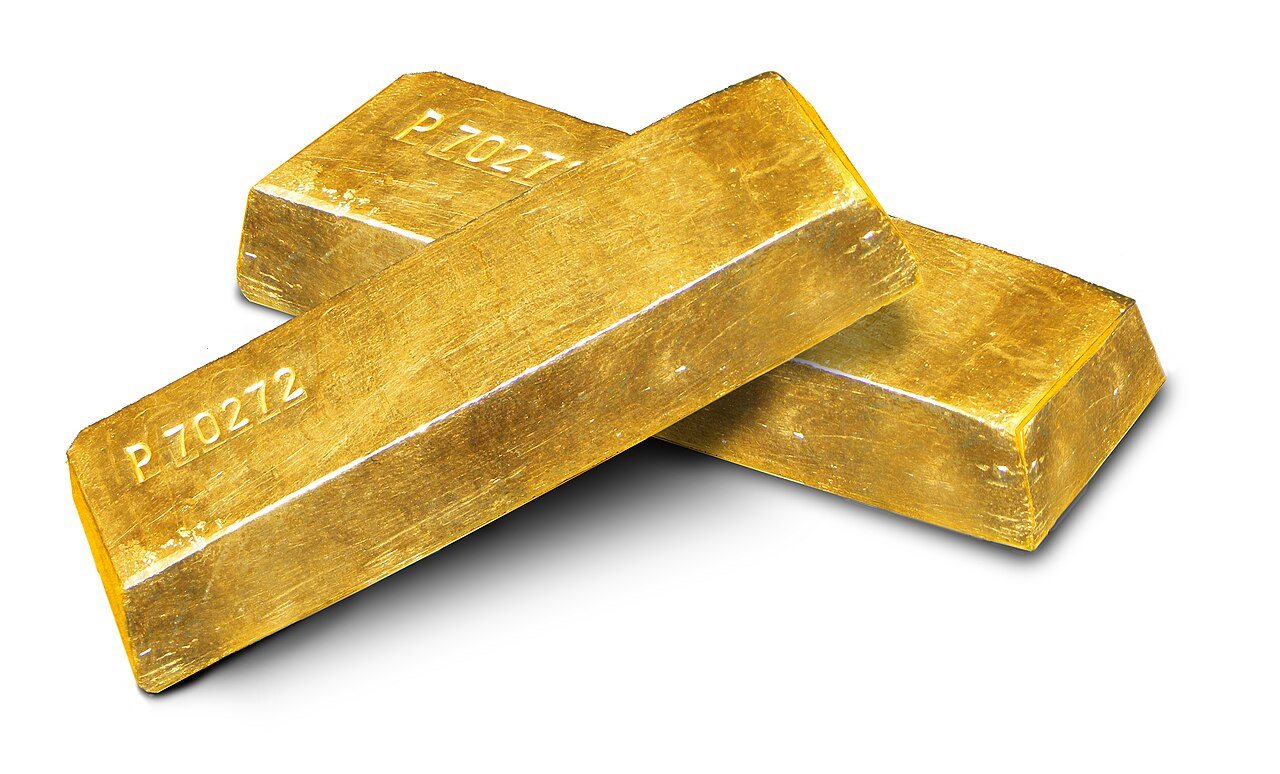
For most Indian investors, gold is the steadier store of value and Bitcoin is the higher-risk, higher-volatility bet: over the five years to 30 September 2026, gold rose about 219% in rupees while Bitcoin rose about 146%, but over three years Bitcoin was ahead (about 257% against 159%). Bitcoin also carries a flat 30% tax in India against 12.5% on long-term gold gains. Indians have trusted gold for generations, and Bitcoin is often called “digital gold”; this guide compares the two honestly, with real rupee numbers, so you can decide what, if anything, belongs in your portfolio.
Key takeaways
- Returns depend heavily on the period: gold beat Bitcoin over one year and five years to 30 September 2026, while Bitcoin beat gold over three years.
- Bitcoin is far more volatile. It fell about 53% from October 2025 to June 2026; gold’s worst fall in the past five years was roughly 28%, in the first half of 2026.
- In India, Bitcoin gains are taxed at a flat 30% (plus cess and any surcharge) with 1% TDS and no loss set-off; gold is taxed under normal capital-gains rules, at 12.5% on long-term gains.
- Since 1 April 2026, Sovereign Gold Bonds are tax-free on maturity only for original subscribers who held them from issue; bonds bought on the stock exchange are taxed.
- They play different roles: gold as a traditional diversifier, Bitcoin as a high-risk asset. Neither is guaranteed to rise, so size positions to your risk tolerance and time horizon.
Why people compare Bitcoin and gold
Both are scarce, neither pays interest or dividends, and neither is controlled by a single government. Gold’s supply grows slowly because it must be mined; Bitcoin’s supply is capped at 21 million by code, with new issuance falling at each halving. That shared scarcity is why Bitcoin supporters call it digital gold.
The size gap is still large. The world’s above-ground gold is estimated at about 220,000 tonnes, worth roughly $29 to $30 trillion at about $4,200 an ounce. Bitcoin’s whole market cap on 30 September 2026 was about $1.67 trillion, under 6% of gold’s value. At that day’s prices, one bitcoin (about $83,400) bought roughly 20 troy ounces, or about 620 grams, of gold at the international price.
Bitcoin vs gold returns in India: 1, 3 and 5 years
The table compares rupee prices on 30 September of each year with 30 September 2026. Bitcoin prices are the daily close converted at that day’s reference USD/INR rate. Gold prices are approximate Indian rates for 24-carat gold per 10 grams, estimated from the international price, the dollar rate and the import duty in force at the time, before 3% GST. Your actual jeweller or ETF price will differ a little.
| Start date | Bitcoin price then (INR) | Bitcoin return to 30 Sept 2026 | Gold, 10 g, approx. (INR) | Gold return to 30 Sept 2026 |
|---|---|---|---|---|
| 30 Sept 2025 (1 year) | ₹1.01 crore | -21% | ₹1,17,300 | +27% |
| 29 to 30 Sept 2023 (3 years) | ₹22.4 lakh | +257% (about 53% a year) | ₹57,400 | +159% (about 37% a year) |
| 30 Sept 2021 (5 years) | ₹32.6 lakh | +146% (about 20% a year) | ₹46,700 | +219% (about 26% a year) |
| 30 Sept 2026 (today) | about ₹80 lakh | n/a | about ₹1,48,900 | n/a |
Three things stand out. First, the start date changes the winner: Bitcoin bought in late 2023 near a cycle low tripled, while Bitcoin bought in late 2021 near a cycle peak lagged gold. Second, part of gold’s one-year rupee gain came from policy: India raised the effective import duty on gold from 6% to 15% on 13 May 2026, which by itself lifts the Indian price by about 8.5% compared with the international price. Third, both assets gained from a weaker rupee, which moved from about ₹74 per dollar in 2021 to about ₹96 in 2026. Check today’s numbers on our gold rate today page and the live BTC price in INR, which is ₹60,60,364 right now.
Bitcoin vs gold: the key differences
History and trust
Gold has been used as money and jewellery across cultures for millennia and is held in large quantities by central banks, including the Reserve Bank of India. Bitcoin launched in 2009, so it has about 17 years of history. It has survived multiple crashes, but it has not been tested across as many economic regimes.
Volatility
This is the biggest practical difference. We measured both from daily prices in US dollars:
| Measure | Bitcoin | Gold |
|---|---|---|
| Annualised volatility, 5 years to Sept 2026 | about 51% | about 19% |
| Annualised volatility, last 12 months | about 45% | about 30% |
| Largest fall in the last 5 years | about 77% (November 2021 to November 2022) | about 28% (late January to mid-July 2026) |
| Most recent large fall | about 53% (6 October 2025 to 30 June 2026) | about 28% from a peak above $5,500 an ounce |
| Days with a move bigger than 5%, last 5 years | about 125 | about 5 |
Gold’s 2026 fall is a reminder that gold also has bad stretches, but Bitcoin has fallen more than 70% from its peak in several past cycles, including 2018 and 2022, and can move 5% to 10% in a day. If a 50% fall would make you panic-sell, that tells you something about how much Bitcoin you should hold.
How they react to markets
Gold has often been bought during crises and when real interest rates fall. Bitcoin, so far, has frequently traded more like a risk asset. It tends to fall when bond yields jump and liquidity tightens, as it did in late September 2026. See our report on Bitcoin slipping as US yields hit a 2007 high. That correlation can change, but it means Bitcoin should not be assumed to be a crisis hedge.
Utility and storage
Physical gold needs a locker and insurance, and has making charges if bought as jewellery. Bitcoin can be self-custodied in a wallet and moved globally in minutes, but losing your keys or falling for a scam can mean losing it permanently. Read hot vs cold wallets explained.
How they are taxed in India
This is where the two differ most for an Indian investor. The rules below apply for FY 2026-27 under the Income-tax Act, 2025, which kept the earlier rates.
| Asset | Long-term after | Long-term tax | Short-term tax | Losses | Other points |
|---|---|---|---|---|---|
| Bitcoin and other crypto | No long-term category | Flat 30% plus cess | Flat 30% plus cess | Cannot be set off or carried forward | 1% TDS on transfers above the annual threshold; report in Schedule VDA |
| Physical gold (coins, bars, jewellery) | 24 months | 12.5%, no indexation | Your slab rate | Can be set off under normal capital-gains rules | 3% GST on purchase, plus making charges on jewellery |
| Digital gold (app-based) | 24 months | 12.5%, no indexation | Your slab rate | Normal capital-gains rules | 3% GST on purchase; outside SEBI’s regulation |
| Gold ETFs | 12 months | 12.5% | Your slab rate | Normal capital-gains rules | No GST on units; small annual expense ratio |
| Sovereign Gold Bonds, original subscriber held to maturity | Held to maturity | Exempt on redemption | n/a | n/a | 2.5% annual interest is taxable at your slab rate |
| Sovereign Gold Bonds bought on the exchange | 12 months | 12.5%, even if held to maturity | Your slab rate | Normal capital-gains rules | Maturity exemption removed for redemptions from 1 April 2026 |
| Tokenised gold (PAXG, XAUT) | No long-term category | Flat 30% plus cess | Flat 30% plus cess | Cannot be set off | Taxed as a crypto asset, not as gold |
Cess of 4% applies on top of each rate, and surcharge applies at higher incomes. Estimate your crypto bill with the crypto tax calculator. Tax rules change with each Budget, so check the current position before you invest.
What tax does to returns: a ₹1 lakh example
Using the rupee returns above, here is what ₹1 lakh would have become after tax at the rates shown (30% plus 4% cess for Bitcoin, 12.5% plus 4% cess for long-term gold held as an ETF), ignoring surcharge and fees:
| Holding period to 30 Sept 2026 | Bitcoin before tax | Bitcoin after tax | Gold ETF before tax | Gold ETF after tax |
|---|---|---|---|---|
| 3 years | ₹3.57 lakh | about ₹2.77 lakh | ₹2.59 lakh | about ₹2.39 lakh |
| 5 years | ₹2.46 lakh | about ₹2.00 lakh | ₹3.19 lakh | about ₹2.91 lakh |
Over three years, Bitcoin’s lead shrinks from about ₹97,000 before tax to about ₹38,000 after tax. Over five years, gold’s lead widens. Crypto’s harsher tax regime raises the return Bitcoin needs just to match gold.
Ways to buy each in India
- Bitcoin: through an FIU-IND-registered Indian exchange using a bank transfer or UPI. See how to buy Bitcoin in India, check our list of FIU-registered crypto exchanges, and compare platforms in our ranking of the best crypto app in India.
- Gold: jewellery, coins and bars, gold ETFs and gold mutual funds through a demat or fund account, or Sovereign Gold Bonds on the secondary market (taxed as shown above). SEBI has cautioned that app-based “digital gold” products fall outside its regulation. Our money section has live gold and silver rates.
- Tokenised gold: tokens such as PAX Gold (PAXG) and Tether Gold (XAUT) track gold prices on a blockchain; one PAXG, backed by one troy ounce, is $3,843.33 right now. In India these are VDAs, so they attract the 30% crypto tax, not gold’s capital-gains treatment.
Crypto vs gold investment in India: which fits you?
There is no single right answer, but these questions help you decide:
- When do you need the money? Money you need within a few years is poorly suited to Bitcoin’s volatility. Gold has also had 25%-plus falls, so neither is a substitute for a bank deposit or emergency fund.
- How would you react to a 50% fall? Bitcoin has done this twice in the last five years. If you would sell in a panic, keep your Bitcoin share very small or zero.
- What is your tax position? At a 30% flat rate with no loss set-off, crypto suits money you can leave invested and do not plan to trade often.
- Do you want a hedge or a growth bet? Gold has a long record as a diversifier and a hedge against a weaker rupee. Bitcoin is a high-risk growth bet that has so far behaved more like a risk asset.
- Can you hold both in small, deliberate amounts? Many investors who hold Bitcoin keep it to a small share of their total savings, and treat gold as a separate, steadier diversifier. Our comparison of crypto vs mutual funds covers the rest of the portfolio.
How might each fit a portfolio?
- Start with goals and time horizon. Match each asset to a goal and a date, not to recent returns.
- Buy gradually. Spreading purchases reduces the risk of buying at a peak, which the returns table shows matters a great deal. Our guide to crypto SIPs explains how.
- Rebalance. If Bitcoin surges and becomes a much larger slice than you intended, trimming it back is one way to manage risk. Remember that each sale is a taxable event.
Frequently asked questions
Is Bitcoin better than gold for Indians?
Neither is better for everyone. Gold has a long track record and lower volatility; Bitcoin has had higher returns over some periods but much deeper crashes, and faces a harsher 30% tax in India. The right mix depends on your goals and risk tolerance.
Has Bitcoin or gold given better returns in India?
It depends on the period. To 30 September 2026, gold returned about 27% over one year and 219% over five years in rupees, while Bitcoin returned about -21% and 146%; over three years Bitcoin led with about 257% against gold’s 159%.
Which is a better investment in India, crypto or gold?
Gold suits investors who want a steadier diversifier with lower tax on long-term gains. Crypto suits only money you can leave invested through falls of 50% or more, and its gains are taxed at a flat 30% with no loss set-off.
Is Bitcoin a safe haven like gold?
Not reliably, so far. Bitcoin has often fallen alongside stocks when interest rates and bond yields rise. Gold has a longer history of holding up in crises, though it can also fall, as it did by roughly 28% in the first half of 2026.
How is tax on Bitcoin different from tax on gold in India?
Bitcoin gains are taxed at a flat 30% plus cess, with 1% TDS and no loss set-off. Gold is taxed under capital-gains rules: long-term gains at 12.5% after 24 months for physical and digital gold or 12 months for gold ETFs, and short-term gains at your slab rate.
Are Sovereign Gold Bonds still tax-free?
Only for original subscribers who bought at issue and held to maturity. For redemptions from 1 April 2026, bonds bought on the stock exchange are taxed on the gain at 12.5% plus cess, even if held to maturity.
Can I buy gold with crypto in India?
You can buy gold-backed tokens such as PAXG or XAUT on some crypto platforms, but they are taxed as VDAs, not as gold. Owning physical gold, gold ETFs or gold bonds is a separate, regulated route.
What is the gold rate in India today?
On 30 September 2026, 24-carat gold was roughly ₹1,48,900 per 10 grams before GST, based on the international price, ₹95.98 per dollar and the 15% import duty. Our gold rate today page shows the live figure.
This article is AI-assisted, educational and general in nature. It is not financial advice and never a guarantee of profit. Every trade is at your own risk on your own exchange. See our risk disclosure and editorial policy.


