Is Bitcoin Mining Legal in India? And Is It Profitable?
Bitcoin mining is legal in India, but a 200 TH/s miner breaks even near ₹9 a unit of power. Worked example with electricity, 30% tax and the 2028 halving.
Yes, bitcoin mining is legal in India. No law bans it and there is no licence for it; the mined coins are taxed like other crypto. Whether it is profitable depends almost entirely on your electricity price. In our worked example below, a modern 200 TH/s machine breaks even at about ₹9 per unit of electricity before tax, and at typical Indian tariffs the margin after 30% tax is thin or negative.
Key takeaways
- Mining is not banned or licensed in India. Crypto is legal to hold and is taxed at 30% plus cess on transfer.
- Electricity is the main cost. At our stated assumptions, break-even is about ₹9 per kWh before tax.
- Electricity and hardware costs cannot be deducted from crypto gains, and mined coins are generally treated as having nil cost, so tax takes about 31.2% of revenue when you sell.
- The 2028 halving will cut the reward per block from 3.125 to about 1.5625 BTC, roughly halving revenue per machine.
- Check your sanctioned load, tariff category, wiring and cooling before buying any machine.
Is bitcoin mining legal in India?
There is no Indian law that prohibits mining bitcoin, and no mining licence or registration regime for individuals. Crypto itself is not banned: it is taxed, and exchanges must register with FIU-IND for anti-money-laundering purposes. It is not legal tender, and the RBI does not approve crypto businesses. Our guide is cryptocurrency legal in India covers the wider position.
Legal does not mean unregulated in practice. Things to check:
- Electricity tariff category. Running a machine for profit on a domestic connection may be treated by your power distribution company as non-domestic use. Read your state's tariff rules or ask your DISCOM.
- Sanctioned load and wiring. One machine of the kind in our example draws about 3.5 kW around the clock, which can exceed the sanctioned load of many homes and overheat ordinary wiring.
- Noise and heat. Air-cooled miners are loud and produce a lot of heat. Housing societies and landlords may object.
- Import. Most mining machines are imported, so customs duty and GST apply. Get a landed-cost quote in writing.
- Running a mining business for others. Offering hosting or pooled mining to customers may bring anti-money-laundering or other obligations. Take legal advice before doing so.
How mining income is worked out
Every day the bitcoin network creates about 144 blocks, each paying 3.125 BTC since the April 2024 halving, so about 450 new BTC a day plus transaction fees. Your share is roughly your machine's hashrate divided by the whole network's hashrate. The method:
- Your share = your hashrate / network hashrate.
- BTC per day = your share × 450 (ignoring fees, which add a little).
- Revenue per day = BTC per day × bitcoin price, minus the mining pool's fee.
- Electricity per day = machine power in kW × 24 hours × your rate per kWh.
- Profit per day = revenue minus electricity, before hardware cost and tax.
Worked example: one machine in India
These are assumptions, not current market data. Put in your own numbers.
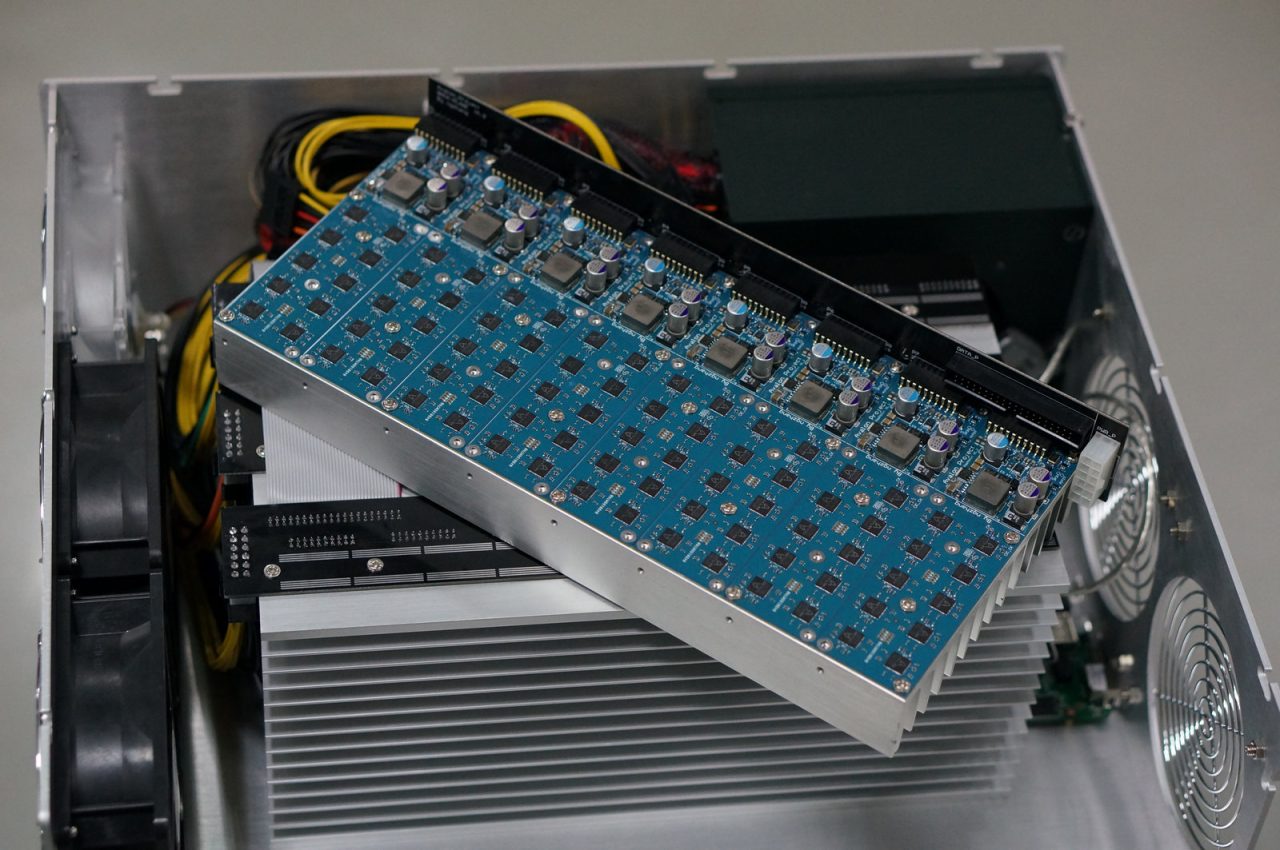
- Machine: 200 TH/s at 3,500 W (3.5 kW), the rated figures for a Bitmain Antminer S21.
- Network hashrate: 950 EH/s (950 million TH/s). The network has hovered near this level recently, but check a live figure before you decide.
- Bitcoin price: about ₹81.4 lakh per bitcoin on 27 September 2026. It is ₹7,970,918 right now on our bitcoin price in INR page.
- Pool fee: 2%. Transaction fees: ignored.
- Machine cost: ₹3,00,000 landed, as an assumption.
Share: 200 / 950,000,000 = about 0.00000021. BTC per day: 450 × that share = about 0.0000947 BTC (9,474 satoshis). Revenue: 0.0000947 × ₹81,37,509 = about ₹771 a day, or about ₹755 a day after the 2% pool fee. Power: 3.5 kW × 24 = 84 kWh a day.
| Electricity rate | Power cost per day | Profit per day before tax | Per month (30 days) |
|---|---|---|---|
| ₹6 per kWh | ₹504 | ₹251 | about ₹7,500 |
| ₹8 per kWh | ₹672 | ₹83 | about ₹2,500 |
| ₹10 per kWh | ₹840 | minus ₹85 | about minus ₹2,500 |
| ₹12 per kWh | ₹1,008 | minus ₹253 | about minus ₹7,600 |
Break-even electricity rate: ₹755 / 84 kWh = about ₹9 per kWh. Many Indian households pay less than that on lower slabs, but a machine using 84 units a day (about 2,500 a month) pushes a home into the highest slabs, and commercial tariffs are usually higher. Cooling and fans add to the power bill and are not counted here.
Now add tax, hardware and the halving
Tax. When you sell mined bitcoin, the gain is taxed at 30% plus 4% cess under the rules introduced as Section 115BBH. Only the cost of acquisition can be deducted, electricity and hardware cannot, and self-mined coins are generally treated as having nil cost. That means tax of about 31.2% of the sale value. On ₹755 of daily revenue that is about ₹236, turning the ₹251 daily profit at ₹6 per kWh into roughly ₹16. Some advisers also argue that mined coins are taxable as income when received; the treatment is not settled, so get a chartered accountant's view. See tax on mining, airdrops and gifts and our worked tax example.
Hardware. At ₹6 per kWh and before tax, the assumed ₹3,00,000 machine takes about 1,200 days (over three years) to pay back, and that assumes nothing changes.
Difficulty and the halving. Network hashrate tends to rise over time, which shrinks your share. The next halving, expected in 2028, cuts the reward to 1.5625 BTC per block. With everything else unchanged, revenue would fall to about ₹378 a day, below the power cost even at ₹6 per kWh, unless bitcoin's price rises or the network shrinks. Read bitcoin halving explained and how many bitcoins are left to mine.
So is mining worth it in India?
For most individuals paying normal tariffs, no. The margin depends on cheap power, efficient machines and a rising bitcoin price, and India's tax rules take a large slice without allowing for costs. Large miners run on industrial power deals and cool climates. Our article on estimates of bitcoin's production cost shows how thin margins can get even for them. If your goal is simply exposure to bitcoin, buying on an exchange on the FIU-registered list is usually simpler; the bitcoin investment calculator shows the maths. Mining on a laptop or phone is not viable for bitcoin, and "cloud mining" apps promising fixed daily returns are a common scam.
FAQ
Is bitcoin mining legal in India?
Yes. No law bans it and no licence is needed for individuals. Mined coins are taxed like other crypto, and you must follow electricity, safety and import rules.
Is bitcoin mining profitable in India?
Only with cheap electricity. In our example with a 200 TH/s machine, break-even is about ₹9 per kWh before tax, and 30% tax on sale leaves little margin even at ₹6.
How is mined bitcoin taxed in India?
Sale proceeds are taxed at 30% plus cess, with no deduction for electricity or hardware, and mined coins are generally treated as having nil cost. Check with a chartered accountant whether tax also applies when coins are received.
Can I mine bitcoin on my phone or laptop?
Not profitably. Bitcoin mining needs specialised ASIC machines; apps that claim to mine bitcoin on a phone are usually scams or pay tiny rewards.
This article is AI-assisted, educational and general in nature. It is not financial advice and never a guarantee of profit. Every trade is at your own risk on your own exchange. See our risk disclosure and editorial policy.