
Russia CBDC Guide: Digital Ruble Rules, Limits and Dates
Russia's CBDC, the digital ruble, opened to the public on 1 September 2026. The law, the 300,000 ruble monthly limit, bank deadlines and the e-rupee compared.
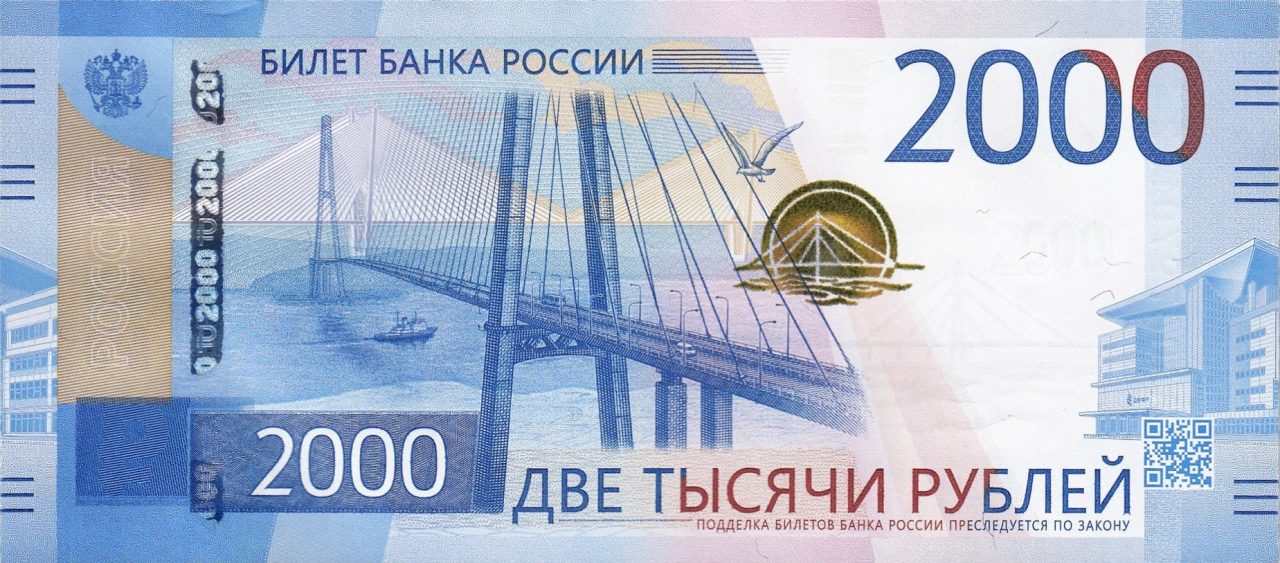
Russia's CBDC is the digital ruble, a form of the national currency issued and recorded by the Bank of Russia. Its mass rollout went ahead as planned on 1 September 2026: the largest banks now have to let customers open digital ruble wallets and pay with them, and big retailers have to accept it, while using it stays optional for ordinary people.
Key takeaways
- The digital ruble is central bank money, not crypto. One digital ruble is always worth one ruble.
- Federal Law No. 340-FZ (2023) created it; Federal Law No. 248-FZ (2025) set the compulsory rollout dates.
- Phase one started on 1 September 2026 for the largest banks and retailers with revenue above 120 million rubles. More follow in September 2027 and September 2028.
- Individuals can move up to 300,000 rubles a month from a bank account into their wallet, and pay no fees.
- India's e-rupee is also a CBDC, but it is still a voluntary pilot with no rule forcing shops to accept it.
What is Russia's CBDC?
A central bank digital currency (CBDC) is money issued directly by a central bank in digital form. Russia's version, the digital ruble, is the third form of the ruble alongside cash and money in bank accounts. All three are worth the same and can be swapped one for one.
The key difference from a normal bank balance is where the money sits. Money in a savings account is a claim on your bank. A digital ruble is a claim on the Bank of Russia itself, held in a wallet on the central bank's own platform. You reach that wallet through your usual bank's mobile app, but the record of what you own is kept by the Bank of Russia. For a shorter news account of launch day, see our report on the digital ruble going live. This guide explains how the system works and how it compares with crypto and India's CBDC.
The law behind the digital ruble
Two laws matter. Federal Law No. 340-FZ, signed in July 2023 and in force from 1 August 2023, gave the digital ruble legal status and made the Bank of Russia the operator of its platform. A real-money pilot started on 15 August 2023 with a small group of banks and selected customers.
Federal Law No. 248-FZ, passed in July 2025, turned the pilot into a compulsory national rollout with fixed dates. An earlier plan to start mass use in July 2025 was dropped, and 1 September 2026 became the start date. The rollout began on that date without a reported delay; the Bank of Russia announced on 31 August 2026 that major banks and retailers would open their systems to digital ruble payments the next day.
Rollout timeline: who must support it and when
The obligations fall on banks and sellers, not on the public. Rupee figures below use about 84.4 rubles and ₹95.98 per US dollar on 30 September 2026, so one ruble was roughly ₹1.14. They are a snapshot and will change.
| Date | Banks that must offer it | Sellers that must accept it |
|---|---|---|
| 1 September 2026 | Systemically important banks, such as Sberbank, VTB, Alfa-Bank, T-Bank and Gazprombank | Clients of those banks with last-year revenue above 120 million rubles (about ₹13.6 crore) |
| 1 September 2027 | Banks with a universal licence | Sellers with revenue above 30 million rubles (about ₹3.4 crore) |
| 1 September 2028 | All remaining banks | Remaining sellers with revenue under 30 million rubles |
Outlets with annual revenue below 5 million rubles (about ₹57 lakh) do not have to accept the digital ruble at all. Banks also had to support a universal payment QR code by 1 September 2026, so shops can take digital rubles without a separate system.
Limits, fees and what you can do with it
- One wallet each: a person or company may hold only one digital ruble account. Sole traders get two, one personal and one for business.
- Top-up limit: individuals can move up to 300,000 rubles a month (about ₹3.4 lakh) from bank accounts into the wallet. Businesses have no cap. Money already in the wallet can be spent without limit.
- What it is for: transfers between people and businesses, shopping, refunds and payments to the state budget.
- Fees: payments and transfers are free for individuals. Businesses pay nothing until the end of 2026. From 2027 merchants will pay a fee, which the Bank of Russia says will be the lowest in the payment market.
- No interest: digital rubles earn no interest, and banks cannot lend them out. That is why many people will keep most of their money in ordinary accounts.
Because the central bank runs the ledger, it can see every digital ruble transaction. There is no cash-style anonymity, and privacy is a common reason Russians give for being wary of it.
Digital ruble vs crypto
The digital ruble and Bitcoin are both digital, but that is where the likeness ends.
| Feature | Digital ruble | Bitcoin |
|---|---|---|
| Issuer | Bank of Russia | No issuer; created by mining |
| Supply | Set by the central bank, no fixed cap | Capped at 21 million |
| Price | Always 1 ruble | Floats; about ₹80 lakh on 30 September 2026 |
| Ledger | Central platform, fully visible to the Bank of Russia | Public blockchain run by thousands of nodes |
| Payments in Russia | Legal tender, allowed | Payments for goods banned; trading allowed with limits |
The same date also brought Russia's first full crypto law into force, which lets retail investors buy approved coins through licensed firms but keeps crypto payments banned. Our guide to Russia's crypto law and its retail limit covers that side. Russia wants the state's own digital money for payments and crypto only as an investment. You can follow the live Bitcoin price in INR, which is ₹8,039,701 right now, and compare it with a CBDC whose value never moves. A privately issued token pegged to a currency is something else again; see what is a stablecoin.
Why the EU banned it before launch
The European Union's 20th sanctions package, adopted on 23 April 2026, banned transactions in the digital ruble from 24 May 2026, months before the public rollout. The EU sees it as a possible route around sanctions. Our explainer on EU crypto sanctions on Russia sets out the other measures.
Digital ruble vs India's e-rupee
India's CBDC is the RBI's e-rupee (e₹). The RBI started a wholesale pilot in November 2022 and a retail pilot in December 2022, and it remains a pilot. The value of e-rupee in circulation fell to about ₹771.7 crore on 31 March 2026, from about ₹1,016.5 crore a year earlier, which shows how little everyday demand there is while UPI is free and instant.
- Compulsion: Russia sets legal deadlines for banks and retailers. India has no rule forcing any shop to accept e-rupee.
- Where it is held: e-rupee wallets are provided by participating banks; digital rubles sit on the Bank of Russia's platform, reached through bank apps.
- Use cases: the RBI has tested programmable e-rupee for government benefits, such as food subsidies in some states. Russia also allows payments to the state budget in digital rubles, free of fees.
- Common ground: both are central bank money worth exactly one unit of the national currency, and neither pays interest.
Our guide what is e-rupee and how it differs from crypto covers India's CBDC in detail, and why the digital rupee is not an Indian cryptocurrency clears up a common confusion. In India, crypto is legal to hold but taxed at 30% plus cess with 1% TDS, as explained in our crypto tax in India guide. If you want Bitcoin rather than a CBDC, start with an FIU-registered platform from our best crypto app in India ranking.
FAQ
What is Russia's CBDC called?
It is the digital ruble, issued and operated by the Bank of Russia. It is a third form of the ruble alongside cash and bank deposits.
When did the digital ruble launch for the public?
The mass rollout began on 1 September 2026, on schedule. A real-money pilot with selected banks and customers had been running since 15 August 2023.
Is the digital ruble compulsory for Russians?
No. Using it is voluntary for individuals. The obligations fall on banks and retailers, which must offer or accept it by deadlines between 2026 and 2028.
What is the digital ruble limit per month?
Individuals can transfer up to 300,000 rubles a month from bank accounts into their digital ruble wallet. Businesses have no limit, and money already in the wallet can be spent freely.
Is the digital ruble a cryptocurrency?
No. It is issued and controlled by the central bank, always worth one ruble, and recorded on the Bank of Russia's own platform, not on a public blockchain.
This article is AI-assisted, educational and general in nature. It is not financial advice and never a guarantee of profit. Every trade is at your own risk on your own exchange. See our risk disclosure and editorial policy.