
What Is Market Cap in Crypto? Circulating Supply vs FDV
What is market cap in crypto, how it is calculated, circulating supply vs fully diluted value, and why a coin's price alone tells you almost nothing.
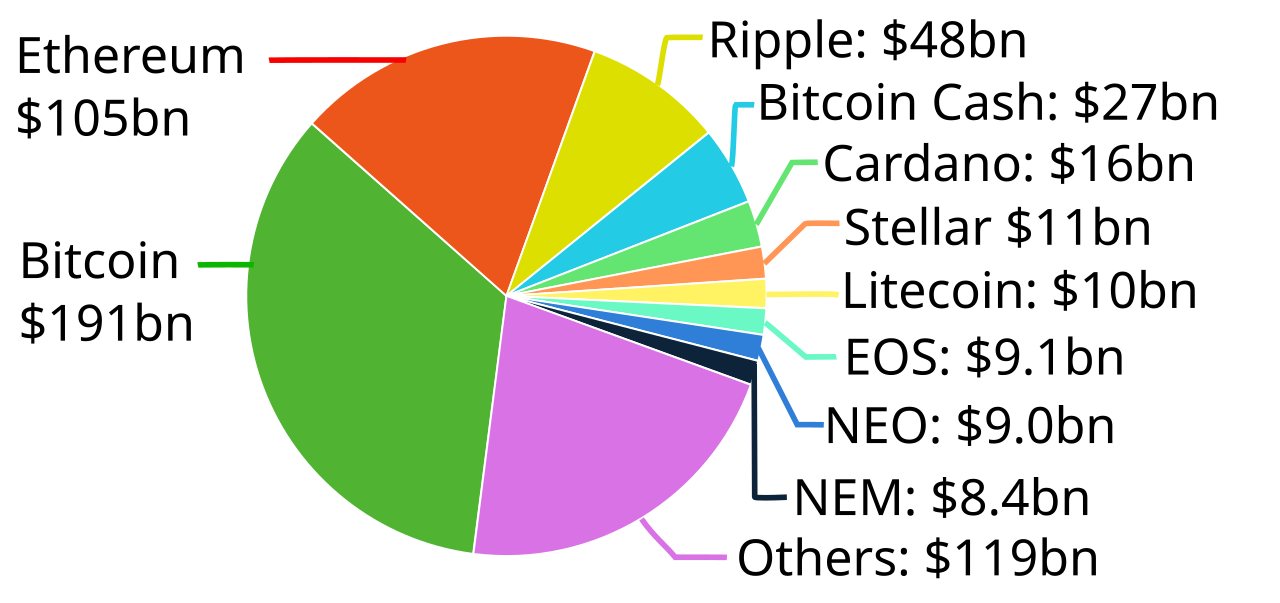
Market cap in crypto is the total value of all coins currently in circulation: price × circulating supply. It tells you how big a cryptocurrency is, and it is a far better measure than the price of one coin. For example, in September 2026 one Bitcoin cost about $83,600 and Bitcoin’s market cap was roughly $1.68 trillion, while one SHIB cost a tiny fraction of a cent but its market cap was about $3.3 billion.
Key takeaways
- Market cap = current price × circulating supply. It is used to rank coins on sites like our markets page.
- Fully diluted valuation (FDV) = price × maximum or total supply, and shows what the value would be if every token existed today.
- A big gap between market cap and FDV warns of future token unlocks and possible selling pressure.
- A low price does not mean a coin is cheap; a high price does not mean it is expensive.
- Market cap is not the money invested and is not the amount that could be withdrawn.
How market cap is calculated
The formula is simple:
Market cap = price of one coin × number of coins in circulation
So if a coin trades at ₹100 and 10 crore coins are circulating, its market cap is ₹1,000 crore. Data sites refresh this every few seconds as prices change. The rankings you see, such as “Bitcoin is number 1, Ethereum number 2”, are based on market cap, not price.
Why price alone misleads
Many new investors in India buy coins because they look “cheap”: “Why buy one Bitcoin for ₹73 lakh when I can buy crores of Shiba Inu?” But the number of coins is arbitrary. A project with 589 trillion tokens will naturally have a tiny price per token.
| Coin | Approx. price (Sept 2026) | Approx. circulating supply | Approx. market cap |
|---|---|---|---|
| Bitcoin (BTC) | $83,600 | ~20 million | ~$1.68 trillion |
| Ethereum (ETH) | $2,650 | ~122 million | ~$323 billion |
| XRP | $1.48 | ~63 billion | ~$93 billion |
| Dogecoin (DOGE) | $0.093 | ~156 billion | ~$14.5 billion |
| Shiba Inu (SHIB) | $0.0000056 | ~589 trillion | ~$3.3 billion |
XRP costs far less than ETH per coin, yet ETH’s total value is more than three times larger. And the question “Can SHIB reach ₹1?” really means “Can SHIB be worth about ₹589 lakh crore?” That is why the honest answer is no. See the live Shiba Inu price in INR to run the numbers yourself.
Circulating supply, total supply and max supply
- Circulating supply: coins that exist and can be traded now.
- Total supply: coins that exist, including those locked (for example, team or foundation tokens not yet released).
- Max supply: the most that can ever exist. Bitcoin’s is 21 million; Dogecoin and Ethereum have no fixed maximum.
Market cap vs fully diluted valuation (FDV)
FDV multiplies the price by the maximum (or total) supply. It answers: “What would this project be worth at today’s price if every token were already out?”
Pi Network is a clear example. In September 2026 about 11.2 billion PI were circulating out of a 100 billion maximum. At around $0.09, the market cap was just under $1 billion, but the FDV was around $9 billion. If more tokens unlock without matching demand, the price has to fall for market cap to stay the same. Track it on our Pi Network price in INR page.
Why a large FDV gap is a warning
Many newer tokens launch with only 10% to 20% of supply circulating. Early investors and teams unlock the rest over months or years. Those unlocks can create steady selling pressure. A low market cap with a very high FDV is a sign to check the unlock schedule before buying.
A worked example: using market cap to test a price target
Suppose a social-media post claims a coin trading at ₹10 will reach ₹1,000. Before believing it, do three quick steps:
- Find the circulating supply: say it is 50 crore coins. Today’s market cap is ₹10 × 50 crore = ₹500 crore.
- Multiply the target by supply: ₹1,000 × 50 crore = ₹50,000 crore.
- Compare with known coins. Is it realistic for this project to be worth ₹50,000 crore, and how would it compare with coins that already are? If the maximum supply is much larger, repeat the maths with that number too.
This takes two minutes and filters out most unrealistic claims.
What market cap does not tell you
- It is not money invested. If a coin’s market cap rises by $1 billion, that does not mean $1 billion of new money came in; a few trades at higher prices reprice every coin.
- It is not cash-out value. If every holder tried to sell, the price would collapse. Liquidity and trading volume matter.
- Supply data can be wrong. Lost coins (many early Bitcoins are thought to be lost), exchange reserves and locked tokens are all estimates.
- It says nothing about quality. Meme coins can briefly reach multi-billion-dollar caps with no product.
Market cap categories and Bitcoin dominance
Coins are often grouped as large caps (typically $10 billion and above), mid caps ($1 billion to $10 billion) and small caps (below $1 billion). Smaller coins can move faster but carry more risk. Bitcoin dominance is Bitcoin’s share of the total crypto market cap; it tends to rise when investors get cautious and fall during altcoin rallies. Track it on our Bitcoin dominance chart.
Using market cap as an Indian investor
Before buying any coin, look up its market cap, FDV, supply schedule and trading volume on our crypto markets page. Compare it with similar projects: is a new token already valued like an established one? Remember that whatever you buy, gains are taxed at a flat 30% under India’s virtual digital asset rules (introduced as Section 115BBH), 1% TDS applies on sales above the threshold (introduced as Section 194S), and losses cannot be set off. These continue for FY 2026-27 under the Income-tax Act, 2025.
Frequently asked questions
What is a good market cap for a cryptocurrency?
There is no single good number. Large caps (above about $10 billion) are generally more established and liquid; small caps can grow faster but are much riskier and easier to manipulate.
What is the difference between market cap and FDV?
Market cap uses the circulating supply; FDV uses the maximum or total supply. The difference shows how many more tokens may enter the market later.
Does a low price mean a coin is cheap?
No. Price depends on how many coins exist. Compare market caps to judge whether a coin is valued high or low relative to others.
Can market cap go to zero?
Yes. If the price falls to zero, so does market cap. Many small tokens, especially rug-pulled meme coins, have effectively reached zero.
Is market cap the same as money invested in crypto?
No. Market cap is just the latest price times supply. The actual money that has flowed in is usually much lower, which is why prices can fall sharply when people try to sell.
This guide is educational and general in nature. It is not investment, tax or legal advice, and nothing here is a guarantee of any return. Crypto is volatile and you can lose money; only invest what you can afford to lose.
This article is AI-assisted, educational and general in nature. It is not financial advice and never a guarantee of profit. Every trade is at your own risk on your own exchange. See our risk disclosure and editorial policy.