Bitcoin vs Ethereum: Key Differences and Which Is Better
Bitcoin vs Ethereum explained simply: purpose, supply, consensus, speed, risks and how each is taxed in India, with a side-by-side comparison table.
Bitcoin is digital money with a fixed 21 million supply, designed to be a simple, secure store of value. Ethereum is a programmable blockchain that runs smart contracts and apps, with ether (ETH) as the fuel that pays for them. Neither is simply “better”: Bitcoin is the more conservative bet on scarcity, while Ethereum is a bet on a growing platform, with more moving parts and more risk.
Key takeaways
- Bitcoin (2009) focuses on being sound money; Ethereum (2015) is a platform for smart contracts, DeFi, stablecoins and NFTs.
- Bitcoin has a hard cap of 21 million coins; Ethereum has no fixed cap but burns part of its fees.
- Bitcoin uses proof of work (mining); Ethereum moved to proof of stake in September 2022.
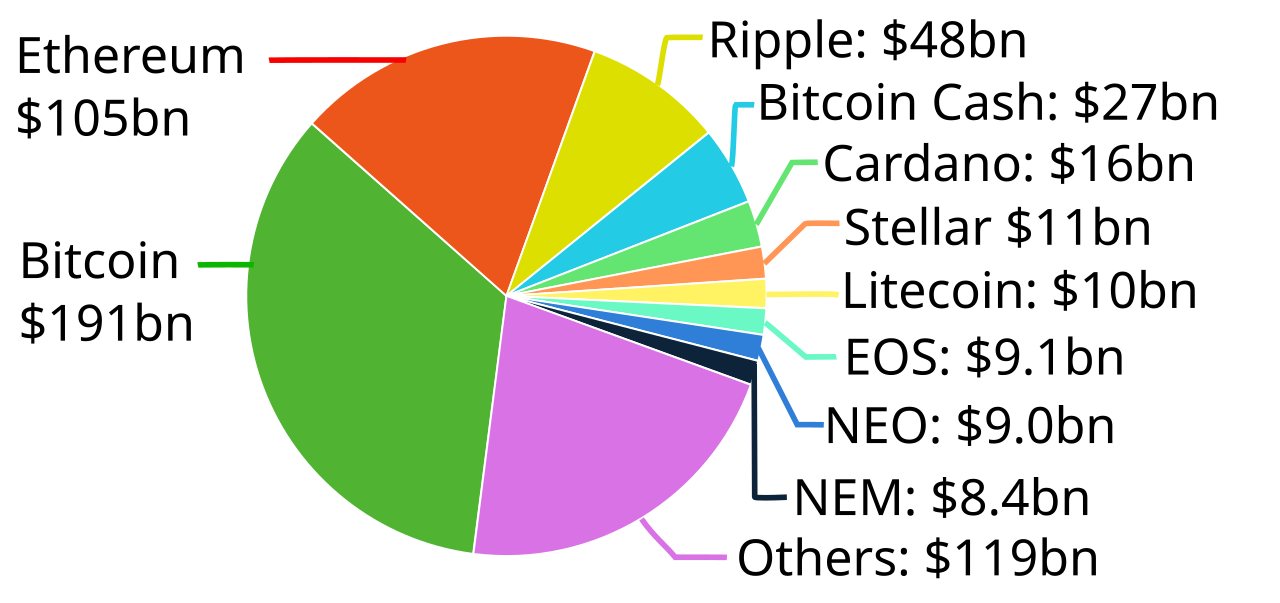
- Bitcoin’s market cap was roughly five times Ethereum’s in September 2026.
- Both are taxed identically in India: 30% on gains, 1% TDS, no loss set-off.
Bitcoin and Ethereum in one paragraph each
Bitcoin was launched in January 2009 by the pseudonymous Satoshi Nakamoto. It does one main thing: let people send and store value without a bank, on a network no single party controls. Its rules change very slowly, and supporters see that as a feature. See live data on our BTC coin page.
Ethereum launched in July 2015, co-founded by Vitalik Buterin and others. It is a “world computer” where developers deploy smart contracts: pieces of code that run exactly as written. Most decentralised finance (DeFi), stablecoin transfers and NFTs run on Ethereum or on layer-2 networks that settle to it. Ether pays the fees. See our ETH coin page.
Bitcoin vs Ethereum: side-by-side comparison
| Feature | Bitcoin (BTC) | Ethereum (ETH) |
|---|---|---|
| Launched | 2009 | 2015 |
| Main purpose | Digital money / store of value | Platform for smart contracts and apps |
| Supply | Hard cap of 21 million; about 20 million already mined | No hard cap; issuance offset partly by fee burning |
| Consensus | Proof of work (miners) | Proof of stake (validators) since September 2022 |
| Block time | ~10 minutes | ~12 seconds |
| Energy use | High (mining) | Far lower since the Merge |
| Can you earn yield? | Not natively | Yes, by staking ETH |
| Upgrade pace | Slow, conservative | Regular upgrades (e.g. Fusaka, December 2025) |
| All-time high | ~$126,000 (October 2025) | ~$4,950 (August 2025) |
| Approx. price, Sept 2026 | ~$83,600 (~₹73.6 lakh) | ~$2,650 (~₹2.3 lakh) |
The key differences explained
1. Money vs platform
Bitcoin’s value case is simple: a scarce, neutral asset, often compared to digital gold. Ethereum’s value case depends on usage: the more apps, stablecoins and layer-2 networks rely on Ethereum, the more demand there may be for ETH to pay fees and to stake. That makes ETH more of a growth asset, with more upside if usage grows and more risk if competitors such as Solana take market share.
2. Supply rules
Bitcoin’s supply schedule is fixed and predictable, with new issuance halving roughly every four years; the next halving is expected in 2028. Ethereum’s supply depends on how much ETH is issued to validators versus how much is burned in fees. When network activity is high, ETH can be deflationary; when activity moves to cheap layer-2 networks, net supply tends to grow slightly.
3. Security model
Bitcoin miners spend electricity to secure the network. Ethereum validators lock up ETH as collateral and can lose part of it for misbehaving. Both have run for years without their base layers being hacked, though apps built on Ethereum have suffered many exploits.
4. Price behaviour
ETH has historically been more volatile than BTC. In the 2025 to 2026 cycle, ETH peaked around $4,950 in August 2025 and later fell more sharply than Bitcoin in percentage terms. Bitcoin’s share of the whole crypto market, called Bitcoin dominance, often rises in downturns.
5. Risks specific to each
Bitcoin’s risks include heavy reliance on miners whose rewards halve every four years (so fees must eventually carry more of the security budget), regulatory pressure on mining energy use, and the long-term question of quantum-resistant cryptography. Ethereum’s risks include competition from faster chains, the chance that layer-2 networks capture value that would otherwise accrue to ETH, the complexity of frequent upgrades, and smart-contract exploits in the apps built on it. Neither list is a reason to avoid either asset; both are reasons to size positions carefully.
6. How ETFs changed both
US spot Bitcoin ETFs launched in January 2024 and spot Ether ETFs in July 2024, giving traditional investors regulated access to both. Bitcoin ETFs have attracted far larger inflows, which is one reason Bitcoin’s share of the crypto market has stayed high.
So which is better?
It depends on what you want to own:
- If you want the simplest, most established crypto asset with a fixed supply, Bitcoin fits that description.
- If you believe blockchains will host finance and apps at scale, Ethereum is the leading platform bet, but you are also betting on its ability to beat rivals.
- Many long-term holders own both, often with a larger Bitcoin share. That is a common pattern, not a recommendation.
Whichever you consider, start small and learn how exchanges, wallets and private keys work. Our guide to buying Bitcoin in India covers the same steps you would use for ETH.
Tax treatment in India
For tax, India makes no distinction between BTC and ETH. Both are virtual digital assets: profits on sale or swap are taxed at a flat 30% (plus cess) under the regime introduced as Section 115BBH, a 1% TDS applies on transfers above the annual threshold under what was Section 194S, and losses on one cannot reduce tax on the other. Swapping BTC for ETH is itself a taxable transfer. These rules continue in FY 2026-27 under the Income-tax Act, 2025, which renumbered the sections. Staking rewards on ETH may also be taxable when received; ask a tax professional. Our crypto tax calculator helps you estimate the bill.
Frequently asked questions
Is Ethereum better than Bitcoin?
Neither is objectively better. Bitcoin is simpler and has a fixed supply; Ethereum does more and has more potential uses, but also more competition and complexity. They suit different goals.
Which is safer, Bitcoin or Ethereum?
Both base networks have strong security records. Bitcoin has historically been less volatile than ETH, and its simpler design has fewer moving parts. Apps built on Ethereum carry extra smart-contract risk.
Can Ethereum overtake Bitcoin?
The idea is called “the flippening”. In September 2026 Bitcoin’s market cap was about five times Ethereum’s, so it would take a very large relative move. It has never happened.
Why is Bitcoin so much more expensive than Ethereum?
Mainly because Bitcoin has far fewer coins: about 20 million, against roughly 120 million ETH. Price per coin is not a measure of value; compare market caps instead.
Are Bitcoin and Ethereum taxed differently in India?
No. Both are taxed at a flat 30% on gains with 1% TDS, and losses cannot be set off against gains on the other or any other income.
This guide is educational and general in nature. It is not investment, tax or legal advice, and nothing here is a guarantee of any return. Crypto is volatile and you can lose money; only invest what you can afford to lose.
This article is AI-assisted, educational and general in nature. It is not financial advice and never a guarantee of profit. Every trade is at your own risk on your own exchange. See our risk disclosure and editorial policy.