What Is Bitcoin? A Beginner's Guide for Indian Investors
Bitcoin explained in plain English for Indian beginners: what it is, how it works, real uses, the risks, and how to research and buy BTC in India.
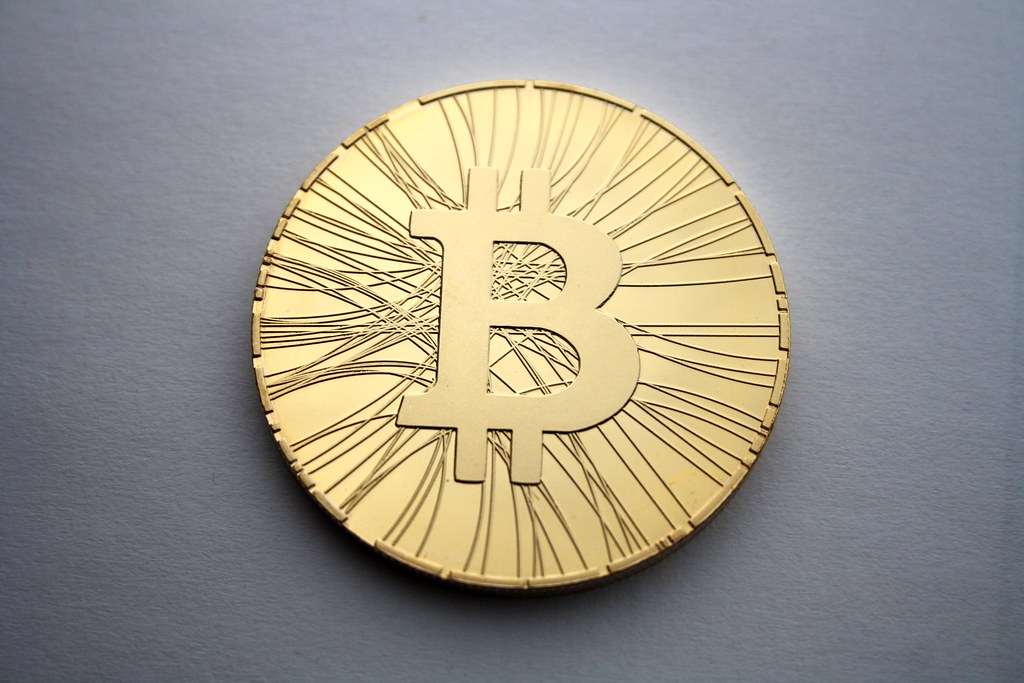
Bitcoin (ticker: BTC) is the first and largest cryptocurrency. It is a form of digital money that runs on a public network of computers rather than being issued by any bank or government. It was launched in 2009 by an anonymous person or group using the name Satoshi Nakamoto. If you are an Indian beginner trying to understand what all the fuss is about, this guide explains what Bitcoin actually is, how it works in plain terms, what it is used for, and how you can research and buy it legally in India.
Key takeaways
- Bitcoin is decentralised digital money, and no single company or country controls it.
- Its supply is capped at 21 million coins, which is why people call it "digital gold".
- Transactions are recorded on a public ledger called a blockchain and verified by miners.
- It is highly volatile; prices can swing sharply in both directions, so never invest money you cannot afford to lose.
- In India, buying and holding BTC is legal and taxed: profits attract a flat 30% tax plus 1% TDS.
What exactly is Bitcoin?
Think of Bitcoin as an internet-native currency that nobody can print at will. Traditional rupees are issued by the Reserve Bank of India, and the supply can be expanded. Bitcoin is different: its rules are set in software, and only 21 million coins will ever exist. No central authority can freeze it, censor it, or create more of it beyond that limit.
Instead of a bank keeping the record of who owns what, Bitcoin uses a shared public database called a blockchain: a chain of "blocks" of transactions that thousands of computers around the world hold copies of. Because everyone holds the same copy and agrees on it, there is no single point that can be tampered with easily.
How does Bitcoin work, in simple terms?
When you send Bitcoin, you are really signing a message that says "move this amount from my address to that address." Your ownership is proven by a private key, a secret code only you should hold. Lose the key, and you lose access to the coins, so security matters enormously.
Mining and confirmation
New transactions are gathered into a block roughly every ten minutes. Special computers called miners compete to solve a hard mathematical puzzle; the winner adds the next block and earns newly created bitcoin plus fees. This process, called proof-of-work, is what keeps the network honest and makes rewriting history extremely expensive.
Halving and scarcity
Roughly every four years the reward miners earn is cut in half, an event called the "halving." This steadily slows the creation of new coins until the 21-million cap is reached (expected around the year 2140). This built-in scarcity is a big part of why supporters value it.
What is Bitcoin actually used for?
- A store of value: Many holders treat BTC like digital gold: an asset they hope will hold or grow in value over years.
- Sending value across borders: Bitcoin can be moved to anyone with a wallet, anywhere, without needing a bank in the middle.
- An investment / speculation: Most Indian buyers hold it hoping the price rises, fully aware it can also fall.
- A settlement layer: Businesses and other crypto networks use it as a base for larger systems built on top.
It is worth being honest: Bitcoin is not yet widely used for everyday shopping in India, and it is not legal tender here. It is mainly held as an investment and a way to move value.
The risks you must understand
Bitcoin's biggest feature, freedom from central control, is also its biggest risk for beginners. There is no helpline to reverse a mistaken transfer, and prices are volatile. Key risks include:
- Price volatility: Double-digit percentage moves in a day are normal. Learning to manage this is part of risk management in crypto.
- Self-custody risk: If you hold your own keys and lose them, the coins are gone forever.
- Scams: Fake "double your Bitcoin" schemes are everywhere. Learn to spot crypto scams in India before you buy.
- Regulatory change: Rules can evolve, so stay informed.
How Indians can research and buy Bitcoin
Start by researching, not buying. Track the live Bitcoin (BTC) price and stats, compare it with the broader crypto markets, and look at our AI price forecasts to understand the range of possible outcomes. Treat them as a guide, never as a guarantee.
To actually buy, most beginners use an Indian exchange that accepts INR deposits and is registered with FIU-IND. Our step-by-step guide to buying Bitcoin in India walks through KYC, deposits, placing an order, and withdrawal to a wallet. If you are brand new to the whole space, read what cryptocurrency is first for the bigger picture.
Tax you should plan for
In India, profits from Virtual Digital Assets like Bitcoin are taxed at a flat 30% (plus applicable cess/surcharge) under Section 115BBH, with no deductions except the cost of acquisition, and crypto losses cannot be set off against other income. A 1% TDS under Section 194S also applies on transfers above the relevant threshold. See our crypto tax in India guide, and confirm current rules with a qualified CA, since they can change.
FAQ
Is Bitcoin legal in India?
Yes. Buying, holding, and trading Bitcoin is legal in India, though it is not legal tender. Profits are taxed at a flat 30% plus a 1% TDS on transfers. It is not banned, nor is it fully regulated, so always confirm the latest position with the Income Tax Department or a CA.
Can I buy less than one whole Bitcoin?
Absolutely. Each bitcoin divides into 100 million tiny units called satoshis, so you can start with as little as a few hundred rupees on most Indian exchanges.
Why does Bitcoin have value?
Its value comes from limited supply (only 21 million will ever exist), a secure decentralised network, and the fact that many people are willing to buy and hold it. Nothing backs it by decree, so its price is set purely by supply and demand, which is also why it is volatile.
Is Bitcoin safe to invest in?
Bitcoin the network has run reliably for over a decade, but the price is high-risk and can fall sharply. Only invest money you can afford to lose, use a reputable exchange, and secure your account and keys carefully.
Ready to go deeper? Check the live BTC price page, browse all our beginner explainers in the news section, or start with the practical how to buy Bitcoin in India walkthrough.
This article is AI-assisted, educational and general in nature. It is not financial advice and never a guarantee of profit. Every trade is at your own risk on your own exchange. See our risk disclosure and editorial policy.