What Is Ethereum and How Does It Work?
Ethereum explained simply for Indian beginners: smart contracts, ETH and gas fees, staking, real use cases, the risks, and how to research and buy ETH in India.
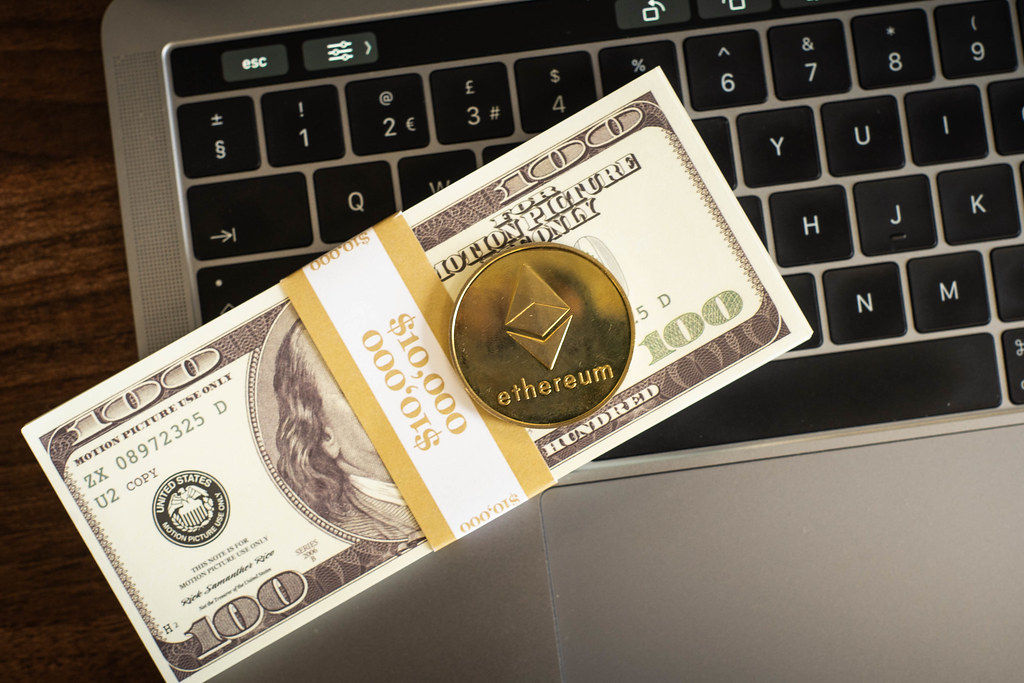
Ethereum is a global, open-source blockchain platform, and ETH (Ether) is the cryptocurrency that powers it. If Bitcoin is best understood as digital money, Ethereum is better understood as a programmable computer that anyone in the world can use: a base layer for apps that run without a central company in charge. This guide explains what Ethereum is, how it works in plain terms, what people actually build on it, its risks, and how an Indian beginner can research and buy ETH legally.
Key takeaways
- Ethereum is a programmable blockchain; ETH is the coin that pays for using it.
- Its big innovation is smart contracts: code that runs exactly as written, with no middleman.
- "Gas fees" are the network fees you pay in ETH to run a transaction or app.
- Ethereum secures itself with proof-of-stake, so holders can "stake" ETH to help run and earn from the network.
- ETH is volatile and, in India, is taxed like any crypto: a flat 30% on profits plus 1% TDS.
What is Ethereum, really?
Ethereum launched in 2015, proposed by Vitalik Buterin and others. Where Bitcoin's blockchain mainly tracks who owns how many coins, Ethereum added the ability to run small programs on the same shared network. These programs are called smart contracts: self-executing agreements written in code that do exactly what they say. For example, "if person A sends 10 units, automatically release the asset to person B."
Because these contracts run on thousands of computers at once and cannot be quietly altered, developers can build applications that no single party controls. That is why Ethereum is often called a "world computer" or the foundation for "Web3."
How does Ethereum work?
ETH and gas fees
Every action on Ethereum (sending ETH, swapping tokens, minting an NFT) costs a small fee called "gas," paid in ETH. Gas is like fuel: the busier the network, the higher the fee. This is important for beginners to understand, because at peak times fees can be significant, though the network keeps working to reduce them.
Proof-of-stake and staking
In 2022, Ethereum switched from energy-hungry mining to proof-of-stake. Instead of miners solving puzzles, "validators" lock up (stake) ETH as a security deposit for the right to confirm transactions and earn rewards. Misbehave, and part of the stake can be taken away. This made Ethereum far more energy-efficient and let ordinary holders earn a yield by staking, though staking has its own lock-up and technical risks.
Layer-2 networks
To handle more users cheaply, most activity now happens on "layer-2" networks built on top of Ethereum. They bundle many transactions together and settle them back to the main chain, cutting costs while keeping Ethereum's security.
What is Ethereum used for?
- DeFi (decentralised finance): Lending, borrowing, and trading apps that run without a bank.
- Stablecoins: A large share of dollar-pegged tokens live on Ethereum. Learn what a stablecoin is to see why this matters.
- NFTs and digital ownership: Art, game items, and collectibles recorded as unique tokens.
- New tokens and projects: Thousands of crypto projects launch their tokens on Ethereum's standards.
In short, ETH is both an investment asset and the "fuel" that a whole economy of apps needs to run.
The risks to weigh
Ethereum is ambitious, and ambition brings risk:
- Price volatility: ETH can move sharply in both directions. Sensible risk management matters.
- Smart-contract bugs: Apps built on Ethereum can have flaws that get exploited; a bug in a contract is not Ethereum's fault but can still cost you.
- Fees and complexity: Doing things directly on-chain can be confusing and occasionally expensive for beginners.
- Competition: Faster chains like Solana compete for the same users, which affects demand.
- Scams: Many rug-pulls and fake tokens use Ethereum. Read how to avoid crypto scams in India.
How Indians can research and buy Ethereum
Begin by watching the live Ethereum (ETH) price and stats, comparing it with the overall crypto markets, and reviewing our AI forecasts to understand the range of possibilities. Treat them as a guide, never as a promise of returns.
When you are ready to buy, most Indian beginners use an FIU-registered exchange that accepts INR. Our beginner's guide to buying Ethereum in India covers KYC, deposits, placing the order, and moving ETH to a wallet. If crypto is new to you, start with what cryptocurrency is and what Bitcoin is for context.
Tax in India
ETH is a Virtual Digital Asset, so profits are taxed at a flat 30% (plus cess/surcharge) under Section 115BBH, with no deductions besides cost of acquisition, and crypto losses cannot be set off against other income. A 1% TDS under Section 194S applies on transfers above the threshold. Importantly, even staking rewards and swaps can be taxable events. See our crypto tax explainer and confirm details with a CA.
FAQ
What is the difference between Ethereum and Ether (ETH)?
Ethereum is the network or platform; Ether (ETH) is the coin used to pay fees and transfer value on it. In everyday speech people often say "Ethereum" when they mean the coin ETH.
What are gas fees?
Gas is the fee, paid in ETH, for performing any action on Ethereum. It compensates the validators who process your transaction. Fees rise when the network is busy and fall when it is quiet.
Can I earn income by staking ETH?
Yes. You can stake ETH to help secure the network and earn rewards, either by running a validator or via a staking service on an exchange. Rewards are not guaranteed, funds may be locked, and in India any rewards can be taxable, so read the terms carefully.
Is Ethereum a good long-term investment?
No one can promise that. Ethereum has strong adoption and a huge developer base, but it faces competition and real technical and price risks. Treat it as a high-risk asset and only invest what you can afford to lose.
Want to keep learning? Track the live ETH price page, explore more explainers in the news section, or follow the practical how to buy Ethereum in India guide.
This article is AI-assisted, educational and general in nature. It is not financial advice and never a guarantee of profit. Every trade is at your own risk on your own exchange. See our risk disclosure and editorial policy.